Peptide Pureness & Quantitation Testing
Peptide Quality Control & Purity Testing Boc Scientific Researches
It is an area-percent purity dimension, not a total identity or task test. Importantly, purity percents describe chemical composition just-- they do not show sterility or organic suitability. Peptides from Maxed Out Compounds are provided specifically for laboratory research usage and are not planned for human or vet purposes. Peptide pureness is commonly expressed as a percent, such as 95% or 98%. This figure represents just how much of the example is composed of the preferred peptide series. For many research laboratory applications, a purity of 95% or greater is considered research-grade.
We have the capability of offering consumers from early peptide medication discovery phases to peptide analysis. We provide all the technological information and instructions for every action of peptide synthesis and analysis. The release process of peptide formulations is complicated, and a lack of scientific data hinders development. We develop artificial insemination release models, supplying total launch contours and kinetic model evaluation to maximize product layout. One of the most usual sources of confusion in peptide tasks is using different high quality terms as if they suggest the same point.
Crude, Desalted, And High-purity: Understanding Peptide Grades
The purity of peptides is typically examined utilizing high-performance liquid chromatography (HPLC). HPLC separates peptides based upon their communications with a fixed phase, enabling contaminations and by-products to be recognized and measured. In addition, mass spectrometry (MS) can be used to verify the peptide's molecular weight and series, giving further confirmation of pureness by finding https://johnathannkyo103.raidersfanteamshop.com/bpc-157-vs-tb-500-full-comparison-2026 pollutants and destruction items. If you've ever before obtained a synthetic peptide for a laboratory experiment, you have actually most likely observed a purity percent on the certification of analysis-- typically values like 95%, 98%, or even 99%. Peptide purity is an important quality metric that tells you what portion of a peptide example is the intended product versus unwanted spin-offs.
Extremely few business research study peptide providers provide MS/MS information on regular COAs-- it is normally booked for pharmaceutical-grade materials and progressed study settings. Nevertheless, some costs providers do supply it on ask for crucial sets. If series confirmation is necessary for your research, this is the analysis to request. It separates the elements of a sample based on their differential affinity for a fixed phase (column packing material) and a mobile stage (solvent system moving through the column). Peptides, with lengthy molecular sequences and diverse conformations, existing challenges for framework confirmation and web content decision. BOC Sciences leverages high-resolution mass spectrometry, LC-MS/MS, and NMR to properly analyze molecular frameworks and offer very delicate measurable support.Recap: What A Research-grade Coa Ought To Include
Unlike a manufacturer's internal testing, independent third-party laboratory recognition is objective and gives objective results, adding reputation with unbiased analytical data. This process is essential for keeping high peptide top quality since the Thymosin Alpha-1 peptide market is mainly unregulated in several locations, and without recognition some vendors may offer impure, mislabeled, or perhaps counterfeit peptides [3] Making certain that each batch undergoes proper laboratory testing helps verify the peptide's authenticity and purity, which is crucial for both research study validity and safety. Peptide pureness refers to the percentage of your sample that is the proper, full-length peptide series, devoid of other peptide-related impurities. For example, a pureness of 98% suggests that 98% of the peptide product is the intended item, while the various other 2% could be unwanted residues of synthesis (such as incomplete sequences or amino acid deletion versions).Determining peptide purity is generally done with analytical high-performance fluid chromatography (HPLC), frequently combined with mass spectrometry (MS) for identification verification. These logical techniques are conventional in peptide quality assurance and you will usually obtain HPLC and MS data with a research study peptide order. The primary analytical methods for peptides consist of fluid chromatography (LC), normally HPLC, integrated with mass spectrometry (MS) for exact molecular weight decision and series recognition.
Shop Coa-verified Study Peptides
- We select approaches according to peptide size, hydrophobicity, fee account, and alteration condition as opposed to compeling every sample into one theme.
- This article will break down how peptide purity is measured, why it stands out from peptide identity, what the usual pureness levels (95%, 98%, 99%) signify, and what "research-grade" suggests in technique for peptide reagents.
- We support targeted evaluation of pertinent residuals based upon the project and sample background.
- If covering isn't perfectly effective, an uncoupled chain can remain to extend in succeeding actions, creating a peptide that's only one deposit short of the target.
- These modifications alter the peptide's organic activity and chromatographic profile.
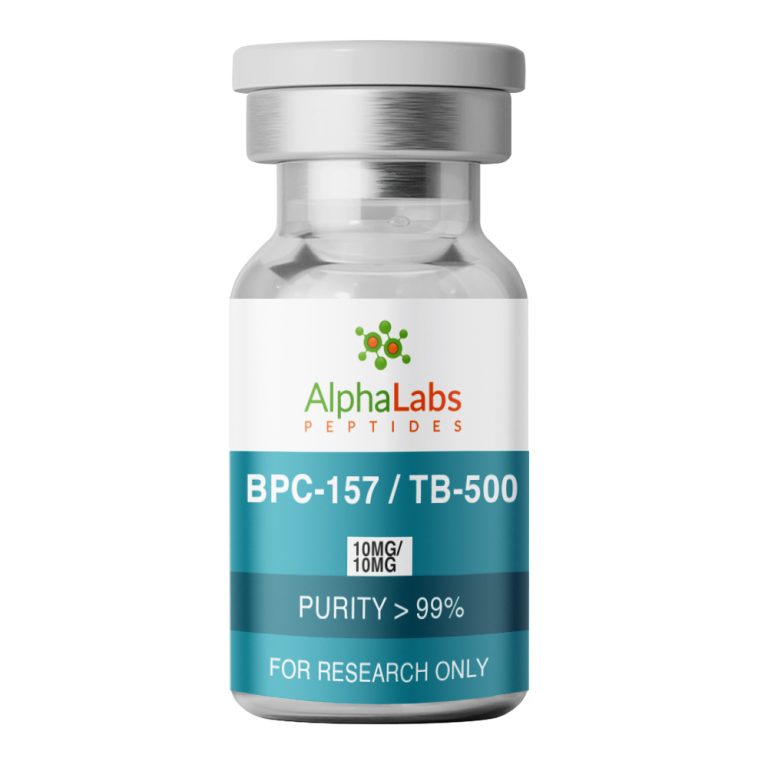
The gold standard for gauging peptide purity is high-performance liquid chromatography, universally abbreviated as HPLC. If you see a purity portion on a peptide product, it almost certainly came from an HPLC analysis. This issues due to the fact that peptides are developed one amino acid at once via solid-phase peptide synthesis (SPPS). At each action, there's a small opportunity that something fails-- an amino acid does not connect, the incorrect modification takes place, or a side reaction produces an unexpected result. Over a chain of 10, 20, or 40 amino acids, those small per-step error prices compound.
While peptide purity isn't the only aspect, utilizing improperly characterized reagents is an identified contributor to irreproducible outcomes. For a 10-residue peptide with 99.5% combining effectiveness, you 'd expect regarding 95% of the end product to be the full-length series before filtration. For a 30-residue peptide at the same effectiveness, that drops to approximately 86%. This is why longer peptides are harder to generate at high purity and normally set you back even more. Pureness is the portion of publications in the delivery that have every web page published correctly, in the right order, without missing chapters and no additional pages packed in. A 95% pureness indicates that out of every 100 "publications" in your set, 95 are excellent duplicates and 5 have some sort of error. Each peptide has a various anticipated molecular weight, so mass verification is not a common badge; it is compound-specific proof. For a much deeper identity-focused description, see Mass Spectrometry Peptide Confirmation. Identity testing validates that what was synthesised is actually the designated series. 